


(February 27, 2026) “Together we stood up to fight massive unlawful taxes on Americans — and won. That is how our system should work.” With those words on social media, Indian-origin lawyer Pratik Shah reflected on a U.S. Supreme Court victory that limited presidential tariff powers.
On February 20, 2026, the Supreme Court ruled in Learning Resources, Inc. v. Trump that President Donald Trump had exceeded his authority in imposing sweeping global tariffs under the 1977 International Emergency Economic Powers Act (IEEPA). The administration had used the law which allows certain actions during national emergencies to justify broad tariffs on imported goods.
The businesses challenging the move, including educational toy companies Learning Resources and its sister company hand2mind, argued that tariffs function as taxes, and under the U.S. Constitution, the power to tax belongs to Congress.
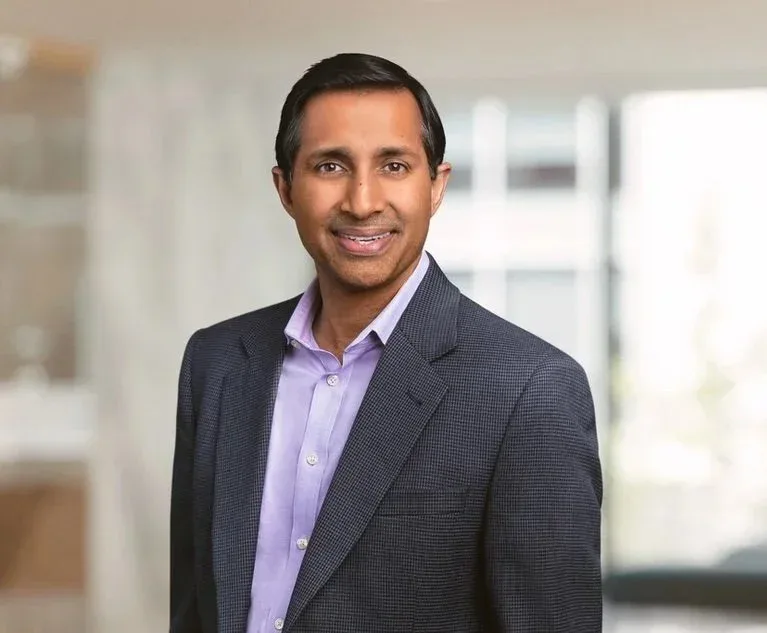
Indian-origin lawyer Pratik Shah served as lead counsel for the companies. Working alongside a broader legal team that included former Acting U.S. Solicitor General Neal Katyal, he argued that emergency powers do not permit a President to impose taxes without congressional authorisation. In a 6–3 decision, the Court agreed, striking down the tariffs and reaffirming that taxation authority rests with Congress.
A constitutional line, and a personal journey
For Shah, the Supreme Court victory was not just a professional milestone. It was the culmination of a journey that began far from Washington’s power corridors. Long before he stood at the Supreme Court podium, Pratik Shah was growing up in a working-class neighbourhood in Akron, Ohio, often the only South Asian child in his school. Outside school, his family was part of a small but tightly knit circle of Indian immigrant families.
“That experience allowed me to develop a strong sense of cultural identity and bridge together my two worlds,” Shah has said in an interview. Learning to move between spaces where he did not always “look like others around” him would later serve him well, right from Berkeley Law to a clerkship with Justice Stephen Breyer, and eventually to arguing cases before the nation’s highest court.
A lawyer almost by accident
Shah’s path to law was not carefully mapped out. “To be candid, my decision to attend law school wasn’t a well informed one,” he has admitted. With no lawyers in his family, his early understanding of the profession came largely from television and high school mock trial competitions.
But once at Berkeley Law, something shifted. He arrived during a period of intense debate over affirmative action and representation. The environment pushed him to think more seriously about how courts shape everyday life, not just as theory, but as lived reality.
The day Justice Breyer walked in
One summer changed everything. As an extern for Judge Charles Breyer in San Francisco, Shah wrote a memo on a constitutional issue, even though he had not yet taken the course. One day, he was called in for feedback. Judge Breyer mentioned that his “older brother” had reviewed the memo. When Shah turned, he saw Justice Stephen Breyer seated with the document in hand.
He later described it as his “first Supreme Court argument.” The moment left a lasting impression and eventually led to a clerkship with Justice Breyer. This opened the door to Supreme Court advocacy.
Learning from the best
During his time in the U.S. Solicitor General’s office, Shah worked alongside some of the most respected appellate lawyers in the country, including Neal Katyal, Sri Srinivasan and Kannon Shanmugam.
Katyal, a former Acting Solicitor General, has argued dozens of cases before the Supreme Court and is widely known for cases involving presidential authority. Working in that office gave Shah exposure to complex constitutional questions and the discipline required to argue before the Court. He has described those senior lawyers as “big brothers” who helped guide him into a field that can otherwise feel closed and intimidating.
From civil rights to executive power
Before the US tariff case, Shah contributed to another major Supreme Court ruling — United States v. Windsor, which struck down the Defense of Marriage Act. As the primary drafter of the government’s petition, he helped shape a decision that paved the way for nationwide recognition of same-sex marriage. The ruling had personal resonance: it eventually allowed his uncle to marry his longtime partner.
Opening doors
Now the head of Akin Gump’s Supreme Court and appellate practice, Shah leads one of the country’s leading constitutional litigation teams. He often speaks about mentorship, particularly for students who may see elite clerkships and Supreme Court advocacy as “intimidating and opaque.” “Find mentors,” he advises. “Take advantage.”
He believes law schools can do more to demystify judicial clerkship, which is the traditional pathway to Supreme Court work, and ensure that talented students do not opt out simply because the system feels inaccessible.
Beyond the headlines
Tariff rates may shift again as trade policy evolves. But the Supreme Court’s ruling in Learning Resources v. Trump established one point that taxation authority rests with Congress.
For Pratik Shah, the decision was not only a legal victory. It was the result of years of preparation from a childhood in Ohio, to mentorship at the highest levels of the law, to standing before the Court to argue that even a President must operate within constitutional limits.
ALSO READ: Neal Katyal: Indian-origin lawyer at the heart of America’s tariff battle