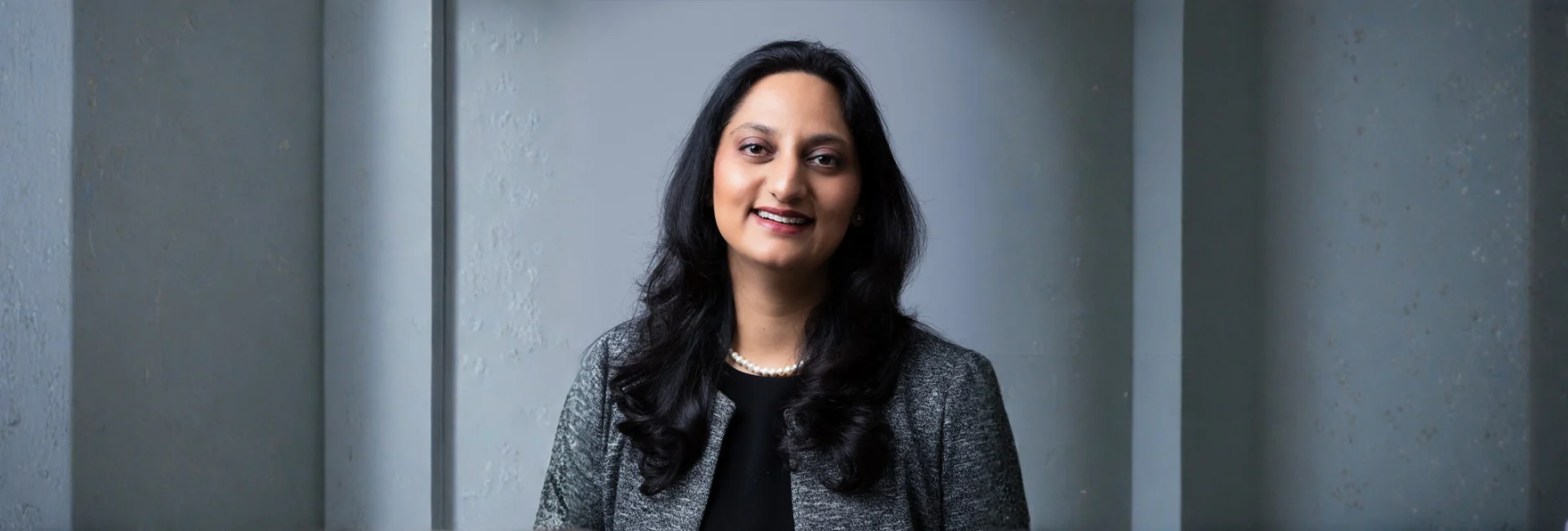


(February 28, 2026) For Anu Lall, healing has always been central, whether teaching the body to restore itself through yoga or exploring how Dharma can guide environmental protection. After years in the corporate world across India, China, the US, Europe and Singapore, she pivoted towards purpose, building the wellness platform YogaSmith and authoring the book which argues that India’s Dharmic traditions may hold answers to today’s environmental crisis.
From childhood yoga to conscious healing
As a child, Anu Lall was taught yoga at home by her mother, who had trained under teachers from the Bihar School of Yoga. Her school in Chandigarh also had regular yoga sessions. Back then, yoga was uncomplicated — no branded mats or performance wear, just simple rugs. But she found it a drudgery, something inflicted upon her.
Years later, after burning herself out in the corporate world — working across India, China, and the US — an experience that took a toll on her health, she returned to yoga, this time consciously. Anu went on to pursue professional certifications and began teaching yoga alongside her corporate career.
That journey led to the birth of YogaSmith — a platform through which she has been teaching yoga programs aimed at healing lifestyle-based illnesses across Europe, Australia, India, and Singapore for close to a decade.
“Not all diseases have a cure. YogaSmith is a combined effort of yoga teachers, naturopaths, doctors, and nutrition experts,” says Anu Lall in conversation with Global Indian.
A certified yoga and meditation teacher and a trained Ayurveda consultant, Anu firmly believes that one must teach the body how to heal. “YogaSmith self-healing guides help you appreciate your own body, look at illness from a new perspective, and over time work towards a drug-free, healthy life,” says Anu, who has trained under Sharath Jois, the renowned Mysore-style Ashtanga yoga teacher.
India and the West: A cultural contrast in yoga
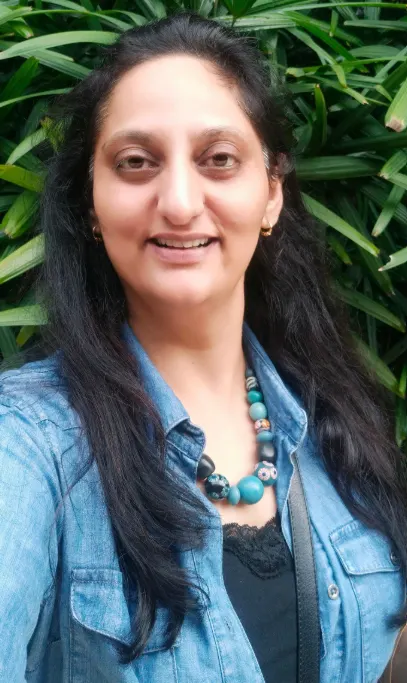
Teaching yoga abroad proved eye-opening. “In India, we often take yoga for granted. Overseas, I realised just how powerful its curative potential is,” says the YogaSmith founder, pointing out that healthcare is expensive abroad and doctors frequently prescribe yoga as adjunct therapy — something that is rarely institutionalised in India.
“In India, people inherit yoga; abroad, they study it with reverence,” she says. There were cultural ironies too. Anu notes that Western students insisted on Sanskrit names — Tikonasana, not triangle pose — while Indian students preferred English terminology.
“We often seek Western validation for our own traditions, while the West approaches them with openness and curiosity,” she remarks.
YogaSmith’s structured healing model
Typically, all plans at YogaSmith run over 6–8 weeks, with robust mechanisms to track biomarkers and assess progress along the way. “All publications are supported by extensive YouTube videos, webinars, and technology tools,” says Anu, emphasising that as a society, people must strive for balance. “Together, let’s put health back in healthcare,” she sums up.
Inside the pharmaceutical industry
Ironically, Anu began her career in pharmaceutical marketing, working across India, China, and the US. She says marketing in healthcare surprises many. “Even within strict regulatory frameworks, companies find ways to push products, often raising ethical concerns around over-prescription,” she explains, pointing out that in India, direct-to-consumer advertising is banned, yet unethical promotion persists — sometimes at the cost of affordable alternatives.
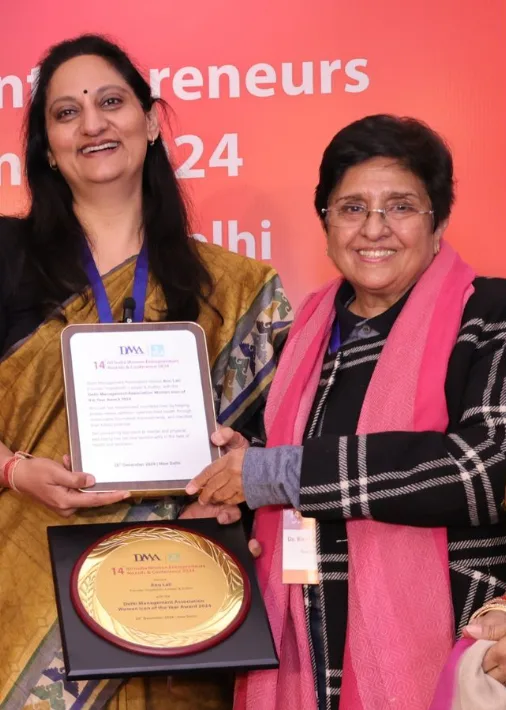
Kiran Bedi handed over Woman Icon of the Year Award 2024 to Anu Lall, conferred by the Delhi Management Association in 2024
From pharma to global tech
From pharmaceutical marketing, Anu transitioned into technology for pharma sales and later into technology sales more broadly. Her corporate journey took her to Europe and Singapore before she eventually returned to India.
“Corporate life gave me a great deal — global exposure, financial security, and cultural understanding. But it also has a shelf life,” she insists. Anu believes corporate success answers many questions — except the one about when to stop.
“Once your needs are met, the real challenge is recognising when it’s time to redefine them. Otherwise, work becomes an endless spiral rather than a purposeful journey.”
Bishnois and the blackbuck: Dharma as environmental practice
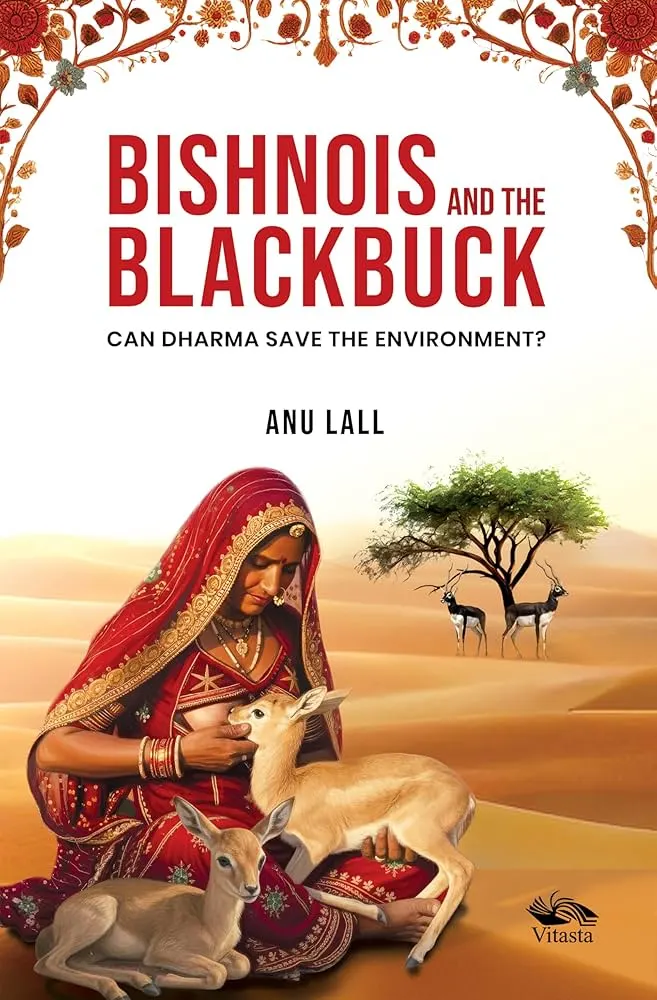
Anu’s book, Bishnois and the Blackbuck: Can Dharma Save the Environment?, which recently hit the stands, has been receiving rave reviews.
For more than five centuries, she explains, the Bishnoi community — primarily from western Rajasthan, Punjab, and Haryana — has lived by a strict ecological code rooted in Sanatan Dharma. “Over generations, hundreds of Bishnois have sacrificed their lives to protect wildlife, especially hirans (gazelles, chinkaras, and blackbucks). The Bishnoi community remembers these sacrifices as martyrdom, not tragedy.”
The blackbuck poaching case and a community’s resolve
The book opens with the infamous blackbuck poaching case and examines how an entire community stood up against a superstar, Salman Khan, allegedly involved in the killing of blackbucks.
“For the last 26 years, the case has remained sub judice. Yet the resilience of the Bishnois has puzzled the nation,” says the author, who tells the remarkable story of a community that turned faith into what may be the world’s longest-running conservation practice.
Why were they willing to confront power, fame, and the legal system for the life of a wild animal? “The book explores the Bishnoi philosophy, a Hindu Vaishnav sampradaya in which protecting the environment is regarded as a dharmic responsibility,” says Anu, who decided to write the book after a faith-led, dharmic conversation with a friend.
From Khejarli to Chipko: A forgotten environmental legacy
The book traces the legacy of the Bishnois from the historic Khejarli Massacre of 1730 — where 363 men, women, and children sacrificed their lives to save trees — to contemporary legal battles fought to protect wildlife.
“This massacre later inspired the Chipko Movement, yet it remains largely absent from mainstream environmental narratives of ecofeminism.”
Drawing on history, religion, ecology, and law, the book questions the over-reliance on Western models of conservation. It highlights how forests and nature have been regarded as sacred in India since the times of the Ramayan and the Mahabharata, and makes a strong case for a Dharma-based approach to environmental protection that remains highly relevant today.
Anu believes the future of environmental protection may lie in ancient, indigenous wisdom.
Writing in a time of environmental crisis
The book took nearly two years to complete. It involved extensive research — studying court judgments and legal documents, meeting community members, and experiencing life on the ground.
She recalls keeping the foundation academic while weaving in travelogue-style reflections to retain the human texture of the story. “What if a solution to the global environmental crisis already exists — and has been practised in Bharat for over 500 years?” wonders Anu.
The book arrives at a time of growing concern over climate change and environmental degradation, offering a powerful reminder that environmental protection has long been a lived practice in India.
A childhood shaped by movement and books
Born in Chandigarh, Anu’s parents were in transferable government services from the Haryana cadre, so movement was constant. She often found herself as the “new girl” in class — new school, new friends, new city.
“I grew up moving cities, so I guess books gave me a sense of permanence. Reading was my passion and still is.” Chandigarh remained the family’s anchor — the place they kept returning to between postings. Anu completed her undergraduate degree and law from Delhi University, followed by an MBA from XLRI, Jamshedpur.
Economics, Shakespeare, and poetry
Academically, she excelled. “In college, I had a slightly quirky distinction: I read every book in the Economics section of the college library.”
Her mother, a literature professor, introduced her to Shakespeare early on, while her father shared his love for Hindi poetry and Sanskrit texts. “My father often told stories of Bishnoi men protecting animals and women nursing orphaned deer,” says Anu, who also enjoys Punjabi and Urdu poetry.
Writing stories of Bharat
Anu genuinely enjoyed the writing process. “Of course, there were moments of despair — tracking references, fearing omissions, ensuring academic rigour. It’s a demanding craft but deeply rewarding.”
She hopes to continue writing stories of Bharat — narratives rarely encountered in textbooks. “Stories like that of the Bishnois, which appear distant and exotic, but are neither relics of the past nor abstractions. They are lived realities, unfolding right here.” She believes some of India’s best ideas and philosophies survive not in archives, but are lived in daily life.
In rhythm with breath and thought
While Anu maintains her pranayama and yoga asana practice, she also enjoys cooking occasionally, writing, and devouring books. It is a life shaped not by dramatic turns, but by a steady return to reflection, balance and purpose.
ALSO READ: More Than a Miss India: Preity Upala’s global odyssey of worldview, dharma and soft power